Saturday, February 16, 2013

Mortgage Rates and Your Home

Mortgage-rates-impact-your-home
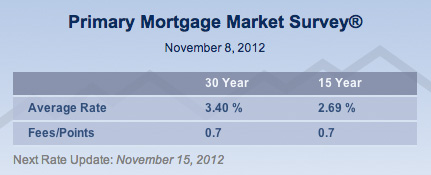
Your home value is affected by many changes in the housing market, but one thing you don’t have to wonder about this week is mortgage rates. It’s been three weeks now and the 30-year fixed-rate mortgage (FRM) has held steady at 3.53 percent with less than a point, according to the Weekly Primary Mortgage Market Survey®. The 15-year FRM remained the same this week, as well with a 2.77 percent rate and average 0.8 point.

Freddie Mac Vice President and Chief Economist Frank Nothaft shared that “Mortgage rates remain near record lows and continue to support housing demand, translating into a pick-up in home prices in most markets.”

Nothaft further stated that, “Among large metropolitan areas, 88 percent saw positive annual increases in the fourth quarter, compared to 81 percent in the third quarter and 75 percent in the second.” Phoenix at 34 percent, Detroit at 31 percent and San Francisco at 28 percent showed the highest increases.

At 2.64 percent (.6 point) and 2.61 percent (.3 point), even Treasury rates seem to be pretty stable, too. The 5 year Treasury-indexed hybrid adjustable-rate mortgage (ARM) averaged 2.64 percent, down from a 2.84 last year. The 1-year Treasury-indexed ARM increased slightly to 2.61 percent but is still well below last year’s average of 2.84 percent.

To check the rates each week for yourself and see other news that may impact your home, please visit Freddie Mac here.

Monday, January 28, 2013

Do You Dream of Building Your Home?

Ideas for building your homeIn an effort to be in the know about trends relating to your home, I consider it a good business practice to follow real estate news. When coursing through headlines, I came across one that captured my attention. “Architect to build home using 3-D printer” it read.

I pondered it for a second and then clicked through to read the article.

The article was a curious piece, but the reality that my clients are not likely to spend $5-6 million dollars on a paper house began to become clear and I moved on to the next piece of news.

I kept thinking about it, though, wondering how many of you (my clients) dream of building your home?

In case any of you do, I wanted to share some tips learned from the Association of Home Builders (NAHB) when they recently presented their 2012 Best in American Living Awards (BALA).  A quick look through the home designs and features points out emerging trends, giving you something to think and dream about should you want to build or even consider upgrades to your home.

Review the list below to see if your home thoughts are in line with the award winners.

  • Pay Attention – Architectural features in everything from molding to cabinetry and flooring need to be in harmony with the flow and integrity of your home.
  • Natural Lights Work – Using light tubes, skylights, window additions, and additional light fixtures, you can really change the look of your home.
  • Make Mealtime Prep Areas Worthwhile – Common kitchen trends involve the use of Carrara marble and “islands” where you and your guests can create meals or socialize together in a less formal setting.
  • Customize Your Home – Specifically consider adding outdoor entertainment areas and cooking spaces, pet-friendly spaces and wine rooms.
  • Look Up! – Color and texture on ceilings is a changing trend, too.
  • Plan for the (Un)Expected – When building or remodeling your home, keep in mind that flexibility is important. As the Greek philosopher Heraclitus noted, “Nothing endures but change.” Make plans in your home design that can expand to fit your needs now AND years into the future.

To see a clear idea of these principles in action, click here.

Wednesday, January 23, 2013

Monday, January 21, 2013

5 Credit Myths - BUSTED!

When it comes to credit, sometimes the largest challenge is the most difficult to surmount: we simply don’t know what we don’t know, so our assumptions and inaccurate beliefs run wild and free through our mental real estate. Most of the time, there’s no harm; following finance fundamentals like paying every bill on time, every time, keep us out of credit danger zones. 

But when it’s approaching the time to buy, refi or even rent a home, relatively small credit score differences can stop you from getting your dream home, and can cost (or save) you thousands of dollars in interest over the life of your loan.

If you’re at a time in your life where it makes sense to invest some time and effort into optimizing your credit score, here are five common credit myths we’d like to help you bust without further ado:

Myth #1:
 Having lots of cash, a great income, or tons of equity, makes your FICO score less relevant. 

Fact:  No matter how much cash you have, if you want a mortgage, you must meet the lender’s FICO score guidelines.  Of course, if you’re flush with cash, it should be relatively easy to make your monthly payments on time.  But if you have come into cash relatively recently or you’re coming off a rough financial patch, lenders don’t not look at your credit score on the theory that your other assets diminish your credit riskiness. Most lenders want nothing more than to avoid having to foreclose on a home, even if the homeowner has other assets. 

And the best predictor of whether you’ll default on a loan in the future is how you’ve handled your credit in the past, so your credit score will drive whether you qualify for a home loan and what interest rate you’re charged, no matter how much you make.  

Two exceptions: if you buy a home with all cash, or take a hard money loan, which usually requires a much larger-than-average down payment and interest rate, you might be able to bypass credit score scrutiny, but you’ll pay for it.

Myth #2:  Having no debt or no late payments means you have great credit.  

Fact:
 Financial responsibility and good credit are two different things. Your FICO score is meant to be a measure of your responsibility when it comes to managing debt, as proven by the fact that you have credit accounts, use them regularly and don’t abuse them.  

Having no credit accounts or debts doesn’t give you good credit - it gives you no credit.  And on the other end of the credit usage spectrum, being maxed out on various credit accounts all the time, submitting lots of credit applications and other credit moves that indicate you may abuse your credit can actually depress your score.  Best practice is to have several credit accounts (student and car loans count!) that you actively and responsibly use on a monthly basis.

Tip: FICO gives a top score to accounts with balances that are 30 percent of the credit limit, so if you can keep your credit card or loan account balances at or around that mark, even better.

Myth #3:  Checking your own credit score in advance prevents surprises when you apply for a mortgage.

Fact:
 Your mortgage originator (broker or banker) must pull their own version of your report from their own provider, and it might have a very different score, rating scale or even different line items than the free or paid report you pulled online.  This is why it’s imperative to start working with a mortgage professional as early as possible - a year in advance is not overkill - so you can detect any errors or issues and get their recommended fix in the works with plenty of lead time.

Myth #4:  If you’ve had a foreclosure or short sale, your credit report will be damaged for 7 years.
   
Fact:
Derogatory credit items, like late mortgage payments, foreclosures and short sales, appear on your credit report for 7 years, but your credit score can be rehabilitated enough to buy a home or obtain other credit in less time, depending on your circumstances. Your post-short sale or foreclosure waiting period depends on a number of things, including what type of loan you’ll be seeking to buy your next home with, how much cash you’ll have to put down and whether there were any extenuating circumstances involved in losing your home in the first place; some loans allow for an immediate purchase, others require a waiting period of 2, 4 5 or even 7 years after the loss of a home.

Of course, your FICO score is also a key criteria in a post-home loss “buy,” but interestingly enough, the length of time it takes to get your FICO score back up depends on how high it was beforehand.  Earlier this year, the New York Times reported that it would take a consumer with a 680 FICO score three years after a foreclosure to bring their score back to that level, while it might take someone with a 780 FICO score (near-perfect) seven years for full score recovery.  

And keep in mind that as your foreclosure or short sale ages, its impact on your score will decrease, too.

Myth #5:  Short sales have much less impact on your credit score than foreclosures.

Fact:
Hear ye, hear ye - short sales and foreclosures have the same impact on your credit score, according to the FICO folks themselves. (The only exceptions are for short sales or deeds-in-lieu of foreclosure where the property was not upside down, which are few and far between, if they’re not just a real estate urban legend!)


However, the number of missed payments you had before your home was lost to foreclosure or short sale might weigh on how gravely injured your FICO score is in the process. At the going rate at which banks are foreclosing on homes - clocking roughly 2 years of missed payments before a home is repossessed - your FICO score could take an even greater hit than if you were able to divest of it via a short sale in 1 year’s time.

Sunday, January 20, 2013

Being A Good Neighbor Starts in Your Home

fresh bread from your homeIn talking with a friend about her recent cross country move, I was reminded of how delightful it is to give and receive service. Perhaps you had a similar experience when you purchased your home. Maybe you’ve been the helpful neighbor yourself. Either way, her story explaining a surprising relocation and a neighborhood welcoming will warm your heart.

“With my husband’s recent promotion we were unexpectedly moved to a really small town. I was pretty scared at first transporting my two small children cross country while being pregnant with a third and we really had no time to prepare. We packed what we had and sent it in the moving truck and took a plane to our new home. I’ve been overwhelmed by how much people really care about one another here. When we moved in, I had neighbors bringing over dinner every night for the first two weeks! Other moms even offered to help with caring for my children and unpacking boxes. The men who lived on the street have helped us move our furniture around the house, multiple times. It’s been an amazing experience for me, simply because I have great neighbors.”

Stories like these are not unheard of in our area. We have a great community and friendly residents, and I’m sure you are one of them (my readers always are). However I’ve been thinking of ways to be a better neighbor and I wanted to share with you the list I’ve created. If you have more ideas, please share them so we can all learn together to make your home, my home, and the homes of our neighbors happier places.

  • Food - Whether you bring over a meal, fresh produce, ice cold waters, or a just baked treat, move-in day is a great time to get know your new neighbors. You can also plan a BBQ or dinner at your home for later in the week to further the relationship.
  • Help - Offering to unload or unpack boxes, pick up something at the grocer while you’re out, or introduce your new neighbor to the kiddie carpool are invaluable things you can do to help your new friend.
  • Information - Sharing your favorite deli or restaurant or the best parks and schools in the area are really helpful and open the door to conversation, as well. You could also pass along names of hair stylists, handymen, and other service providers and mention street sweeping and trash days.
  • Cheer - Dropping off some freshly cut flowers or a candle with a card and your contact information can really make someone feel welcomed, too. But if you really want to do the trick, try raking their leaves, mowing the lawn or bringing in their trash cans. That’ll win a smile any day.

Friday, January 4, 2013

Laundry Pods Can Poison Kids

Tide-pods-kids_e7f83ba9aaac39641ac9fe9f445e9544_3x2_jpg_600x400_q85

These laundry detergent pods are convenient, but they might look like candy to kids. Image: CPSC

New, single-use laundry pods are cute and colorful — and all too tempting to children, who are ending up in the emergency room when they eat one like candy.

That’s why the Consumer Product Safety Commission has issued a safety alert, warning parents that children exposed to the chemicals in these pods are at risk of serious injury.

The commission is aware of 500 incidents involving children and adults injured by the liquid pods, which are made by several laundry detergent companies — not just Tide. 

The pods contain concentrated toxic chemicals and dissolve quickly when exposed to wet hands or saliva. If eaten, the pods can produce vomiting, drowsiness, throat swelling, difficulty breathing and loss of consciousness.

The CPSC recommends:

  • Do not let children handle laundry pods.
  • Keep pods sealed in original packaging and locked up out of your child’s sight or reach.
  • If swallowed or exposed to the eye, immediately call Poison Help at 1-800-222-1222.

Wednesday, January 2, 2013

No Sweat: Programmable Thermostats Reduce Your Energy Costs

Visit houselogic.com for more articles like this.

Copyright 2013 NATIONAL ASSOCIATION OF REALTORS®

Sunday, December 2, 2012

HOW LONG WILL IT LAST!! - In your Home

Schedule of Normal Life
"The Old House Web'

Plumber_

Where did my value you......

Appliances

Life Estimate in Years
Dishwashers
5 to 12 years
Disposals
5 to 12 years
Washers and dryers
8 to 12 Years
Water heaters
8 to 12 Years
Refrigerators
15 to 20 Years
Stoves
15 to 20 Years


Gutters and Downspouts
Copper
Life Estimate in Years
Galvanized
15 to 20 Years

Life of home if well-maintained
Heating and Air Conditioning
Life Estimate in Years

Warm air furnace
8 to 12 years
Heat pumps
8 to 12 years
Air conditioning compressors
8 to 15 years
Gas chillers
8 to 15 years
Hot water boilers
30 to 50 years

Plumbing

Life Estimate in Years
Gas hot water heater

8 to 12 years
Electric hot water heater
10-15 years
Private disposal systems (septic)
15 to 25 years
Galvanized water pipes
30 to 50 years

Roofs

Life Estimate in Years
Selvage or asphalt roll

12 to 20 years
Wood shake and shingle
15 to 20 years
Asphalt
15 to 20 years
Fiberglass
15 to 20 years
Asbestos shingle
30-50 years
Slate
40-75 years

Tuesday, November 27, 2012

Holiday Housekeeping and Your Home

Have-someone-else-clean-your-house-this-season
Is a clean house on your list for Santa this year? If not, it may be worth considering since time just seems to evaporate this time of year.  Between attending community and work socials, school events for children, and family gatherings, it seems there is little chance to enjoy the season while still keeping up with tasks related to maintaining your home.

Perhaps you feel guilty having someone else clean your home.  If this is the case, consider the many other jobs you outsource during the holidays, from dining away from home to babysitting or gift wrapping services, and recognize that it is allowable to treat yourself to a more relaxed and festive end of the year, through hiring someone to clean your home for you this December.

Some Tips to Consider When Hiring Someone to Clean Your Home

  • Ask for a Referral – Whether you hire based on a recommendation of a good friend or your Realtor, quality matters in housekeeping so you want to make sure someone you trust feels confident in the ability of your cleaning crew.
  • Define the Tasks – Depending on your home, the amount and type of cleaning will vary.  Be specific about any requests related to vacuuming, sweeping, mopping, dusting, dishwashing, window cleaning, laundry services, bed making, and other tasks so that your needs will be met accordingly.
  • Consider the Details – Ask about bonding, licensure, screening, and training and be present at the first cleaning to ease your comfort level, if needed.  Point out areas needing special care or that will not be accessible and offer explanations, as warranted.
  • Determine Price & Supply Needs – Negotiate the price of your cleaning prior to the work being done.  Keep in mind that you have several options, from one-time service to weekly, bi-weekly, monthly, and live-in cleaning options and will typically see a discount in rates with more frequent cleaning.  Also ask if you need to provide anything (vacuum, cleaning supplies, etc), since many services bring their own supplies.
  • Ask for Clarity – Once you’ve determined the work to be done and agreed on a price, ask what you can expect.  Will you be having one person or a crew cleaning your home?  Will they return on the same day and time each visit?  Will the crew rotate or can you expect to see the same cleaner(s) each time?  How is payment to be made and do you need to be present while the cleaning is being done?

Then, sit back and relax knowing that one of the stresses of the holiday season has been delegated.  Go out and have some fun and then enjoy returning to your home, your newly cleaned and sparkling home, that is!

Holiday Housekeeping and Your Home

Holiday Housekeeping and Your Home

Monday, November 19, 2012

6 reasons to GOOGLE your address!!

YOUR ADDRESS


There are at least 6 compelling reason to Google your own address- especially if it is an address your are thinking of renting, buying or selling. Smart home owners would do well to search for their address too and here is why….


1) To see if Megan’s Law Registrants live nearby – Safety first folks. Megan’ Law requires law enforcement authorizes to make information available to the public regarding registered sex offenders in their neighborhood. Nearly every state that has a Megan’s Law-type sex offenders registry has on online version that serves up the names and address and sex offenders history and even photos. Check it out for your state at MEGAN’S LAW or for Utah at UTAH SEX REGISTRY


2) To find Crime reports and Data for your home – Cities, county and state law enforcement agencies all post crime date online, But GOOGLE searches for your address or city and “CRIME REPORT” is most likely to turn up your local police or sheriff’s offices crime report. If you are moving to a city or even a state where your are not completely familiar, doing a quick search on Google holds the potential to reveal some disturbing or comforting crime activity information

3) To detect scammer how are trying to sale or rent your home – Internet scammers have taken to ripping off house information and putting together fake listings, offering other peoples for rent and even for sale with a lease to own option. The offer list the home with with cheap and easy terms, then ask the would be buyers or renters to please wirer or send the deposit money over seas, where the fake sellers can get it while they are traveling- you guessed it – Nigeria. These scams come to light only when the new renter start stopping my the home and peeking in the windows.

4) Checking out the values in your neighborhood to possible help with your taxes - In real estate the value of your home is driven mostly by the value of those home in your neighborhood that are similar to your also known as comps. (In some now disclosure state this maybe   more difficult) This could give you a good reason to know what your neighbors home sold for. If you see a pattern of homes selling for lower then yours homes assessed value, you can use these comps to petition your county to lower your own property taxes

5) To see your homes property records – Its a story as old as homes, well as old as websites that displays homes records and listings. Your homes records online are populated from the public records about your home. which are either  so old they don’t include upgrades and additions that have been done over time, or they’re just flat out wrong for a number of reasons. If you Google your address and find that your home description is riddled with errors, contact your county public record agency to correct them, this is particularly important if you are planning on selling your home anytime soon

6) To see home Home’s GOOGLE street view – When your selling your home its especially critical to see everything that prospective home buyers may see. That means checking out how your home listing looks on all online real estate sites. One thing homes savvy buyers is the Google map street view of the homes they maybe interested in prior to going to see the home for themselves. If you are unfamiliar with this Google attached a camera to the top of a car and drove down almost every street in America. Now Google uses can have an over head view along with a street view of the homes. That a look for yourself at GOOGLE MAPS this will blow your mind

Wednesday, November 14, 2012

Get Multiple Offers on Your Home

multiples offers on your homeYou may have been talking with a neighbor or simply heard a snippet on the radio or television, but suddenly you are aware that right now is a “seller’s market.” Thoughts of an instant million dollar sale of your home or timing the selling of your home may be coursing through your brain and if so, you should consult with a knowledgable real estate agent to get the inside scoop. Many areas are experiencing low home volume and high demand which could place your home for sale in prime position.

As a home owner, you may not understand the technicalities behind multiple offers and so working with a local real estate agent can provide you with the much needed guidance you’ll require to navigate your home sale. There are some simple steps that can aid you in getting multiple offers and the basics are outlined below.
<h3>Sell Your Home For More Money</h3>
&nbsp;
<ul>
    <li>Stage Your Home for Sale - In a “seller’s market,” potential buyers know they need to act fast to put in an offer on the house (or houses) they like. Make sure yours is on that list by tending to every detail, cleaning well and listening carefully to suggestions made by your real estate agent.</li>
    <li>Spread the Word - From hosting a Broker’s Preview to the open house and other advertising, make sure that your home for sale is being properly promoted. Attention must be drawn to your home in order for it to be seen and offers to be submitted. Give your home the promotion it needs or find a real estate agent who will, so you can wait for the offers to roll in.</li>
    <li>Ask for a Lockbox - To have multiple offers, multiple people need to view your home (in staged condition) at all times. Realize that getting your home sold quickly will likely mean a bit of inconvenience for you in the short term. The sooner you accept an offer, however, the less time you’ll need to spend adjusting your lifestyle.</li>
</ul>
If you need more advice or simply want a real estate agent you can trust with your home, please don't hesitate to call.  Lori Fleming  your Weber, Davis, Morgan and Box Elder agent.  I'd love to get you multiple offers!

Thursday, November 8, 2012

Turn of the Century!! Willard Utah

Flyer_front
Turn of the century fully remodeled red brick farm house with easy access to school shopping, Willard Bay and I-15

Home offers 3 bedrooms 2 baths bright open kitchen with center island and all new appliances.

All new windows, wiring, plumbing sitting on over 1/2 acre corner lot in Willard. Dont let this one get away Home wired with Cat 5 and coax wiring

Call today for your private showing Lori Fleming Golden Spike Realty 801-940-9560

For more photos CLICK HERE

How Much Should You Spend on Your Home Purchase

Buying a home starts with determining how much house you can afford. While it’s important to be careful of buying more house than you can afford, changes in the mortgage industry make doing that nearly impossible these days. Recent restrictions on debt to income ratios, required documentation, and loan to value amounts have established industry standards that aid in preventing homeowners from buying more home than is affordable. While restrictive, these requirements can put your mind at ease as a homeowner, knowing that you are not in over your head in the purchase of your home. With that in mind, the key in home buying is to buy as much home as you can afford! Interest rates are at their lowest in decades and home values are still in question in many areas, allowing you to enter low on both counts and possibly purchase your home for much less of a monthly payment than you would normally expect. As values begin to return, interest rates may start to increase, too, allowing you less home for the same monthly amount. According to West Coast-based Mortgage Banker Ken Starks, “At this point in the market cycle, interest rates are as low as they EVER have been, and real estate values appear to have fallen all they will fall in many markets across the country." Starks added, "These two factors alone combine to create the buying opportunity of a lifetime with the possibility of excellent long term real estate gains and long term low payments.” As a potential home buyer researching loan products, there really are not many options commonly chosen these days. Most home buyers choose a fixed rate 30 or 15 year mortgage. This week's average rates for both fixed rates are under 3.5%, according to the Freddie Mac Primary Mortgage Market Survey®. Specialty products and adjustable rate mortgages are still offered at times, but generally only to individuals with high net worth and disposable income (who really don’t need the loan). Many new home buyers turn to FHA loans as they allow more flexibility on down payments, credit scores, and debt to income ratios. While FHA loans may initially seem to have more fees, a good mortgage company will work with you and often absorb that cost to get you the right loan, so don't be afraid to compare rates when buying your home. If you are considering buying a home, consider the additional guides below when determining your price point and work with an agent who knows your area, to find you the best home that delivers value, in your budget and in the best location.

  • Stay within the income guidelines, having only 30% of your income being related to housing costs (including HOA fees if applicable).
  • Keep your TOTAL debt under 40%.
  • Read the fine print. If you are withdrawing from a savings plan (such as a 401K or IRA) for your down payment, be aware of any penalties or restrictions before you count on the money and plan accordingly.
  • Plan on something going wrong and maintain some savings. Many new homeowners find themselves challenged when disaster strikes. Whether the trouble results from a natural disaster or one that’s man-made, reserving at least 3 months of expenses in a savings account, will help you to weather the storms of life, and enjoy your home long-term.

Tuesday, November 6, 2012

Loving Your Home Doesn’t Have To Be Expensive

What can I do to get my home ready?” This question is often posed when someone is ready to sell a home, but it doesn’t have to be. Making your home repairs and upgrades as needed can actually lead to a happier home owning lifestyle and will also mean that you are ready to go, when and if, it is time to sell your home.

Home improvements can be costly, but they don’t have to be. There are many projects that can be done inexpensively and relatively quickly that will deliver huge value.

Take for instance, paint.  Painting a room or the front door of your home instantly brightens that space and can bring a smile to your face whenever you enter the area. While painting can be labor intensive, the actual material cost is quite low, with a gallon of high quality paint costing less than $35.

Painting the outside elements of your home, whether it’s the trim, stucco or fencing, will bring that same joy every time you return or leave your home, as well. And, for exterior walls, painting may actually be more than you need – it’s amazing what power washing can do to illuminate your home! The same could be said for installing additional lighting to your landscaping. Small exterior painting and lighting projects can be done for under $350 and deliver results you can instantly see!

Perhaps you feel the interior of your home is dated and cramped and would prefer a more open design. If so, you can take on a slightly bigger project and remove a wall or convert an existing wall to a half wall. Check with a contractor to make sure you aren’t removing a bearing wall beforehand, as that could result in a more costly project than originally intended. Another option would be to build or install built in organization systems in your home so that you have more “homes” for your stuff, or better yet, just reduce the amount of stuff you already have. The adage “less is more” will really have you appreciating the space created through clutter removal.

Installing new windows, a tank-less hot water heater, an outdoor eating area, and adding insulation or other energy efficient home items can also improve your satisfaction as a home owner and increase your home’s perceived value when it’s time to sell. These upgrades may initially cost more, however with rebates and available tax credits, may be a very worthwhile expense for your home.

No matter what projects, if any, you decide to do with your home, the key is to enjoy it.  Enjoy it now, enjoy it later, and enjoy the memories that owning your home will allow you to create in the far distant future.  Your home is part of living the American Dream and you need to make sure your dream is the best it can be!

Wednesday, October 31, 2012

Too Big? Too Small? Choosing the Size of Your New Home

Tumbleweed-tiny-house-an-option-for-your-new-home
Trends in home buying are based on averages, the medium between extremes. Today’s economy has spurred the need for downsizing and created a market for the so called “tiny home.” However it wasn’t too long ago when every new home buyer was searching for the perfect “McMansion.” Deciding the size of a home, especially your new home, is a very personal decision and many considerations should be taken into account before your purchase.

Ask Yourself the Following Questions When Buying Your New Home

  • What are your needs in your new home?
  • Do you need space geared to a family or is studio living more your speed?
  • Is a guest room (sewing room, office, you fill in the blank) a necessity on a short or long-term basis?
  • Do you prefer a one-story or two-story home?
  • Do you enjoy cleaning house or prefer a minimalist approach?
  • What’s more appealing to you – functional space or white space?
  • What’s your lifestyle and how will it play out in your home – more formal or more casual?
  • How do you feel when entering friends’ homes?  What impresses YOU?

Asking these questions can more easily direct you to options you may not have contemplated initially when searching for your new home.  Take some time and consult with a real estate agent who knows your area so that when it is time to buy, you can focus on what matters most to you in your new home, other than location, of course.  To see the latest trend in “tiny homes,” visit the Tiny House Blog here.

Thursday, October 25, 2012

Selling Your Home This Holiday Season?

Holiday-doors
Traditionally the holiday season is not the best time to sell your home due to tight schedules, weather conditions, and overall busy schedules. However if you still would like to sell your home before year-end, there are some things you can do to make your home outshine other listings.

You may even find that the holiday season makes for a better sale as only serious buyers are spending the time to view your home due to all those demands. Your buyer could also have goals or timeframe deadlines they are trying to meet with regards to the end of the year, giving you a more solid escrow, as well.


Suggestions to get your home ready while still enjoying the holiday season:


  • Warm up your home and your buyers with freshly baked treats, a comfortable thermostat, and a few well-chosen decorations.  Remember the “less is more” phrase and keep surfaces clear when possible.
  • Only use the best photos in your online and paper advertising. When it’s cold out, more buyers shop from home and only venture out if they REALLY like what they see.
  • Maintenance of your home is critical at this time. Many potential buyers may “drive by” and you need to make sure their first impression leads them to want to know more.
  • Use a real estate agent who knows your area. An agent who specializes in relocation could be key, as well, since job transfers often create end of the year buyers. Give me a call to see how quickly we can get your home sold!

Tuesday, October 23, 2012

Protecting Your Home From Winter Storms

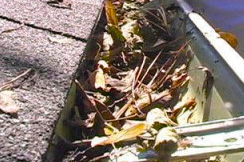
Your home and rain guttersCooling weather trends bring with them rain and snow and can also result in damage to your home. Now’s the time to consider making needed preparations to your home, from roof repairs and securing insulation to cleaning the rain gutters to make sure your home is safe to weather the storms. Surprisingly, clear rain gutters can do a lot to help your entire home, by protecting windows and doors, siding and even your home’s foundation from too much concentrated moisture.

Clearing your gutters of leaves and other objects requires the use of a ladder, so if you are afraid of heights or cautious about your abilities, you may consider hiring a handyman to complete this task. For those of you who enjoy the adventure of home repairs, however, clearing your gutters can be relatively easy if you follow the tips below. Or for a quick video

  • Use a safe and solid ladder to reach your gutters. You will need to move the ladder frequently (do not try to stretch to reach far areas while standing on your ladder).
  • Wear protective gear, such as goggles and work gloves – you never know what you’ll find up there!
  • Use the right tools. A small hand shovel (even a plastic sand shovel) and bucket or disposable bag should be sufficient. You can also use a scrub brush as needed.
  • Test it out. Once the gutter is clear, use your garden hose to have a practice storm and track the flow of water racing through your cleaned rain gutter.
  • If all is well, your work is complete. If not, look closely at your drain pipes to make sure they are not clogged, as well, or evaluate is your gutter slope needs to be adjusted.

Clearing your rain gutters should be done at least once a year, depending on where your home is located. If you find your gutters require care more often, you may want to consider purchasing covers for them.

Thursday, October 18, 2012

Create the Best Jack-O-Lantern for Your Home

Halloween-pumpkin-carving-ideas-80-554x370
As the days count down to Halloween you may find yourself trying to determine the best way to enliven your porch pumpkin.  While many techniques have been developed for jack-o-lantern carving and design, the following basic principles can guide you to well-lit spooky success as you entertain trick-or-treaters who visit your home and neighborhood.

Choose Your Pumpkin - Traditional jack-o-lanterns are round, but you may want a flat pumpkin or one that’s been scarred if it works better with your overall design.  Variety is rampant in pumpkins these days, allowing you to get just the right style and color for your home.

Carving Prep – Before beginning your project, gather your materials from around your home, from knives and scoops to newspaper and patterns, so that you can create quickly and avoid making a big mess.  Prior to carving your pumpkin face or design, you’ll need to create a cap or lid by cutting a circle/zigzag shape around the stem at a slant so you can scrape and scoop out the pumpkin insides.  Another option is to cut from the base to avoid interference with a patterned pumpkin.

Determine Your Design - Choose from a combination of basic shapes or explore using paper to create a stencil pattern once you begin designing the look of your jack-o-lantern.  Once your stencil is in place, use a pushpin to transfer the design from paper to your pumpkin and then carve by following the pin pricks.  You can also draw directly on your pumpkin with a washable marker and carve on the lines.  Carve the smallest areas of your design first as they can be tricky and if you mess up, you’ll be able to modify your design if needed.  When your carving is complete, simply wash off any remaining marker to see your finished product.

Choose Your Light - While a candle will definitely contribute a more eerie glow, if you have small children or pets, it may be wiser to use LED lights for your jack-o-lantern.  Disposable glow sticks are a possibility, too, if you prefer to try out differing colors at little expense.  Either way, make sure your pumpkin is well lit on Halloween, so that little goblins and ghouls will know that they can visit your home for a special treat.

Wahoo I love Halloween. and when buyer a house you don’t need to be scared I am here to help.